Next Fest 26|2 Summary + Casualties: Unknown Review
Summary of the best demos from June Next Fest 2026, and a full-length review of Casualties: Unknown demo
Another Next Fest is behind us, so it's time for a summary post! This time around a bit different because it's accompanied by a review of a demo that took me 17 hours to reach a satisfying enough spot to write a review of. I do try and complete everything I write about! So enjoy a write-up of the most fun things across the fest, and a detailed account of my thoughts on Casualties: Unknown.
Day by Day Rundown
Essentially a collection of all the highlights. If you want to know more, each "Day X" links back to the original post!
Day 0
- Asterika: Phantom Rose Refrain – Grid-based rhythm bullet hell. Wild mix that works astonishingly well
- Draco Blade – A dragon metroidvania with combo-focused combat, featuring delightful pixel art
Day 1
- Dragon Dragon Fire Fire Deluxe – Arcade-styled game about collecting all food as a little fire-breathing dragon
- Wink Out – A 1 vs 1 rapidfire arcade shooter, highly similar to Rounds
Day 2
- Echo Weaver – Time looping metroidbrania, mainly focused on thinking/platforming
- Void Hue – A color-based puzzle sokoban with surprising depth and meta mechanics
Day 3
- Order of the Sinking Star – A massive puzzle game that mixes multiple types of sokoban puzzles into a surprisingly cohesive package
- Astra Bestiary – A creature collecting/fighting game with a lot of heart and a lively world
- Rhythm Katana Dance – A rhytmic slice-em-up that has you zip from enemy to enemy as you clear the levels
Day 4
- The Button Effect – An abstract puzzle game about pressing buttons, and figuring out what they actually do
Day 5
- Demon Bluff – A singleplayer social deception game, that uses cards to simulate dozens of roles
Day 6
- Tape Man – A puzzle game about using a tape measure in some creative ways
- Nothing Strange Here – A cozy game about exploring a strange town and photographing the mysterious occurrences
Day 7
- Sojourn Past – A bullet hell metroidvania that lives up to both of its genres
- Cat Mail Co. – Cozy single-/multi-player game about working at a cat post office
Now normally I'd put a top X demos here, but the tricky bit this year is that all of the best demos were very evenly spread. With the possible exception of Sojourn Past and Order of the Sinking Star, all the demos are in the camp of "this is great, but [...]". The tricky thing about demos is that they are a showcase of the final game, not the final game. Things can change, both for the better and for the worst. So it's hard to say if a caveat of a demo will be remedied, ignored, or made worse. As such instead of diving deeper into some demos, I want to try my hand at a proper full review of a demo that wasn't part of my Next Fest coverage due to the massive time commitment it would require to finish:
Casualties: Unknown Review
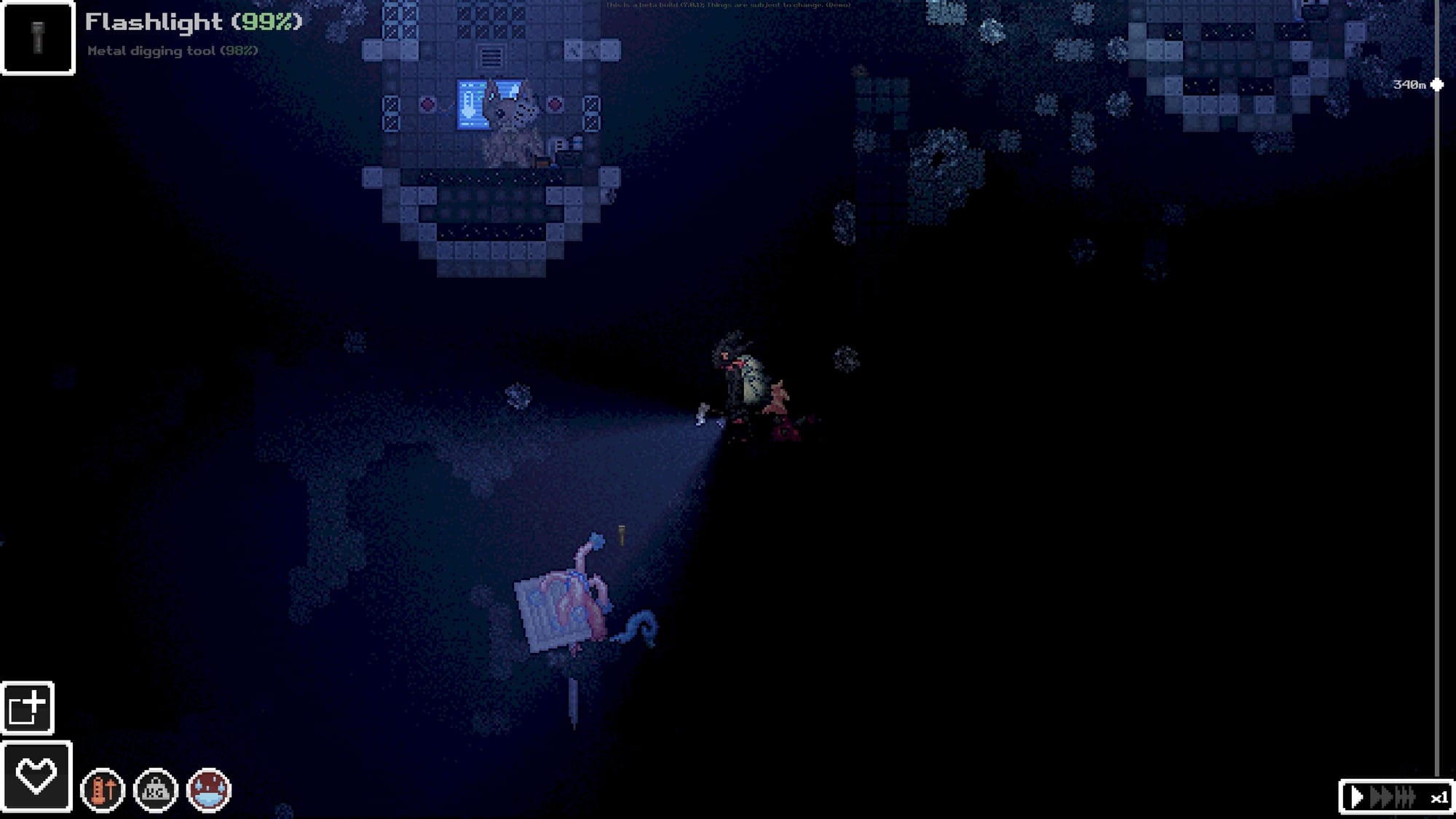
The game drops you into the caves, and it's your goal to figure out how to survive
Casualties: Unknown is like piloting an airplane. When everything goes according to plan it's smooth as butter, chill, and generally delightful. But everything gets turned upside down when emergency strikes, and your entire skill in the game is less about playing the game, and more about how you react when things go wrong. And wrong they will go.
In a typical survival game you have three main opponents: Hunger, Thirst, and The Environment. C:U adds an extensive simulation of the cardiovascular system on top of that. You don't merely have to bandage a wound, you have to do it quickly enough to not lose too much blood, make sure to sanitize the wound so it doesn't get infected, all while managing your pain threshold lest you go into shock. And that's just scratching the surface of a system that covers opioid overdose and withdrawals, heart fibrillation and arrhythmia, radiation sickness, and much, much more. There is enough pain and suffering here that I was scared away from even trying this demo for a while, but if you're not too susceptible to scenes shown in the screenshots below then it might be worth shifting that fear into wariness.
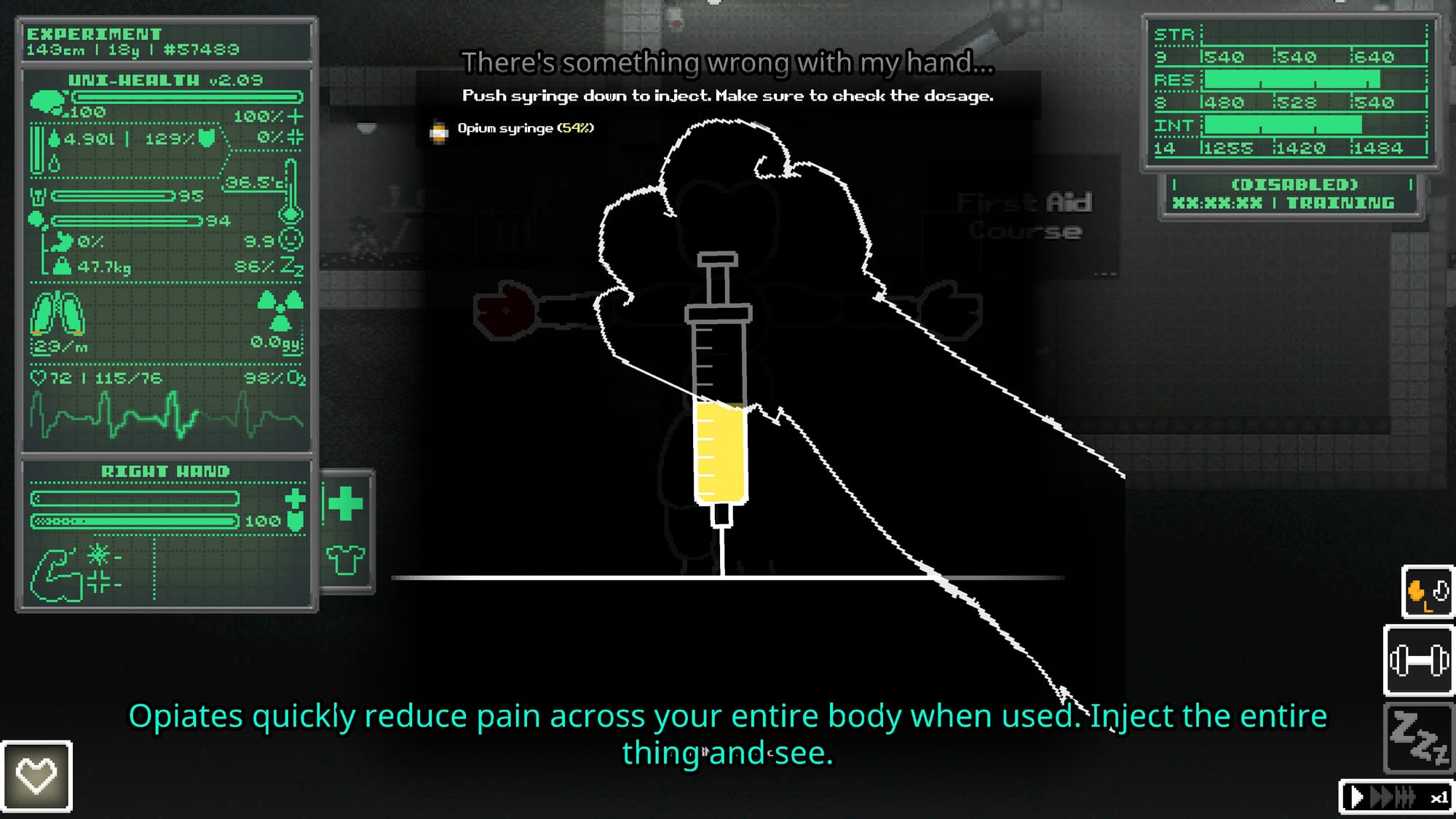
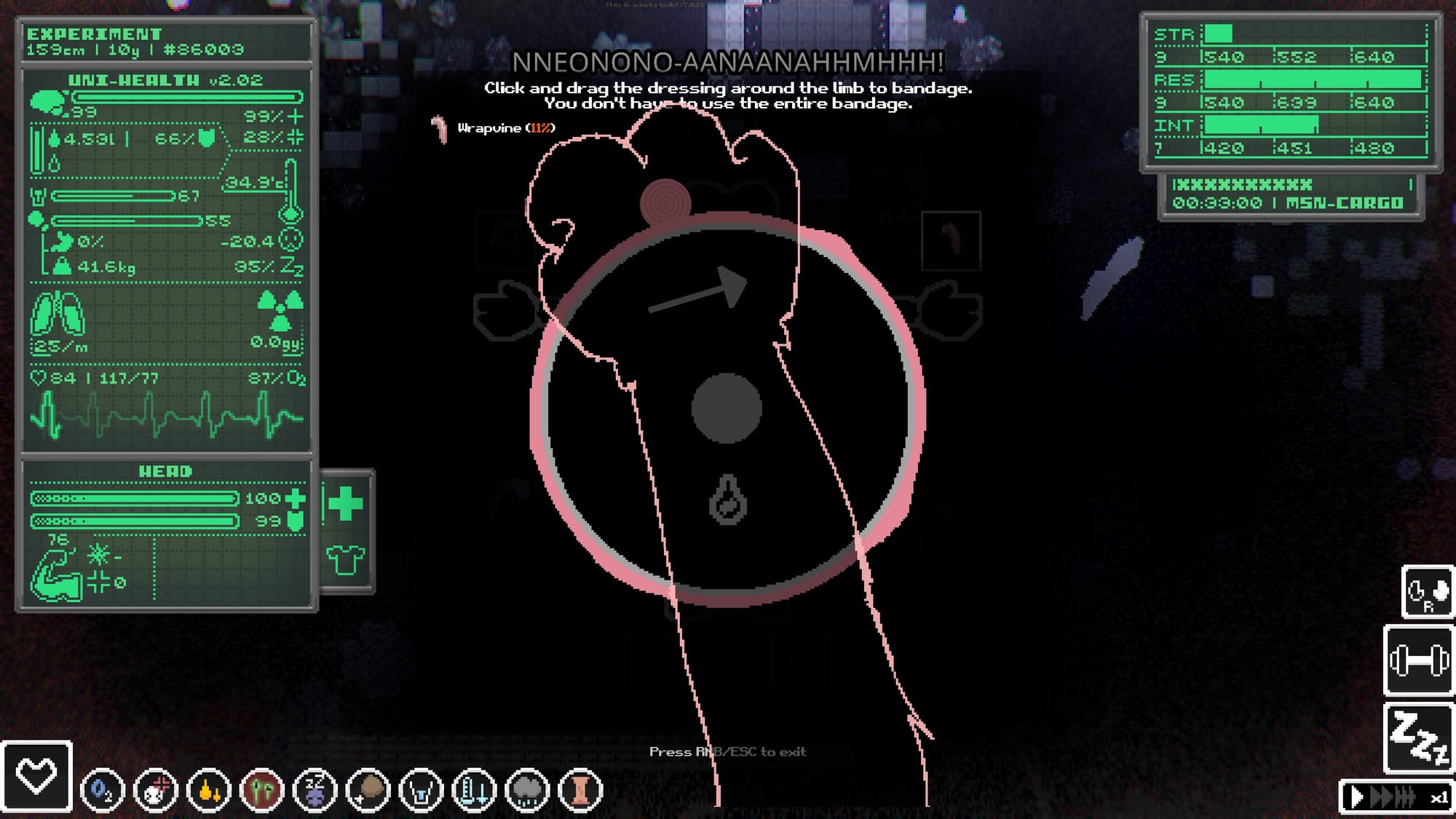
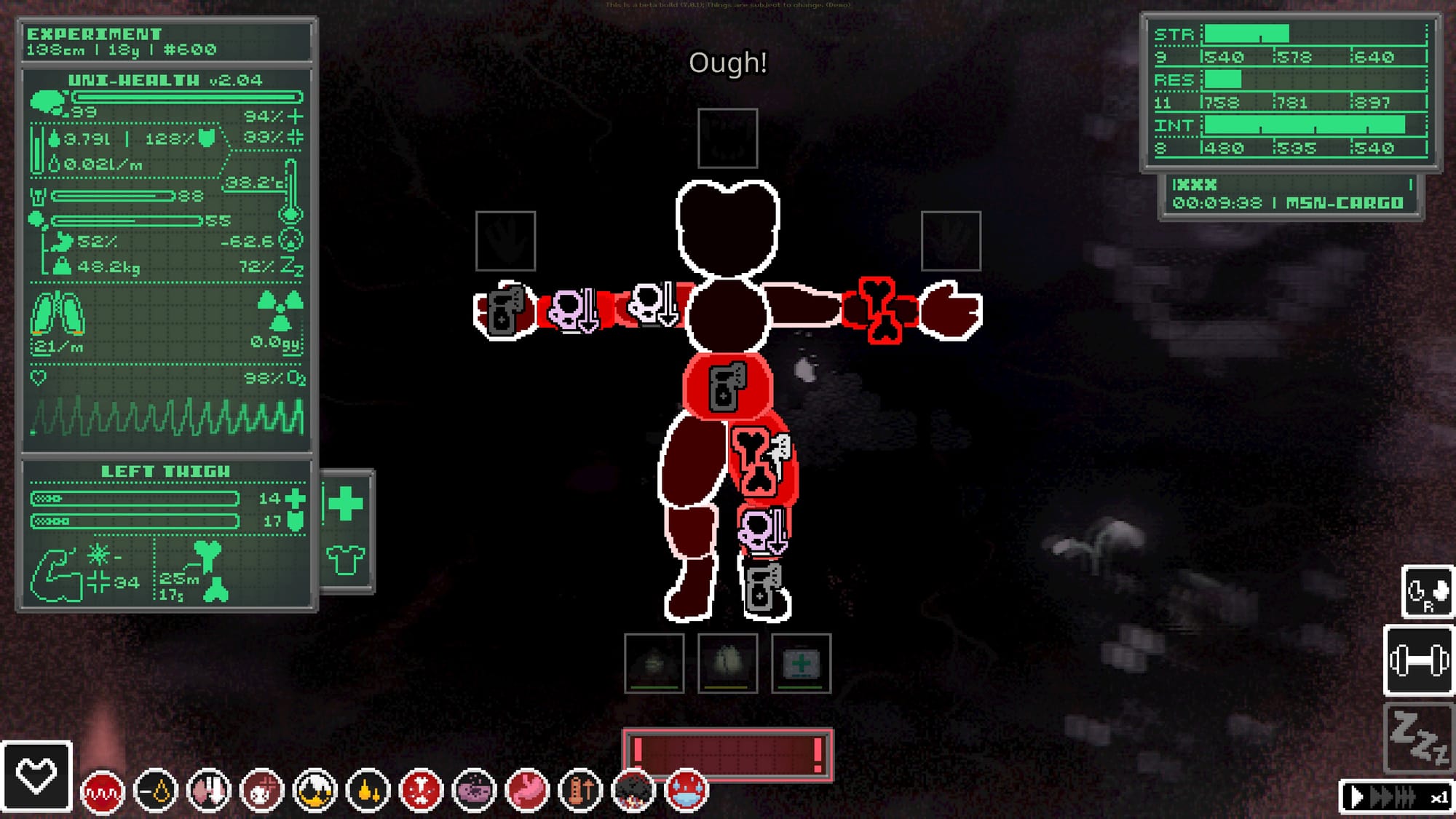
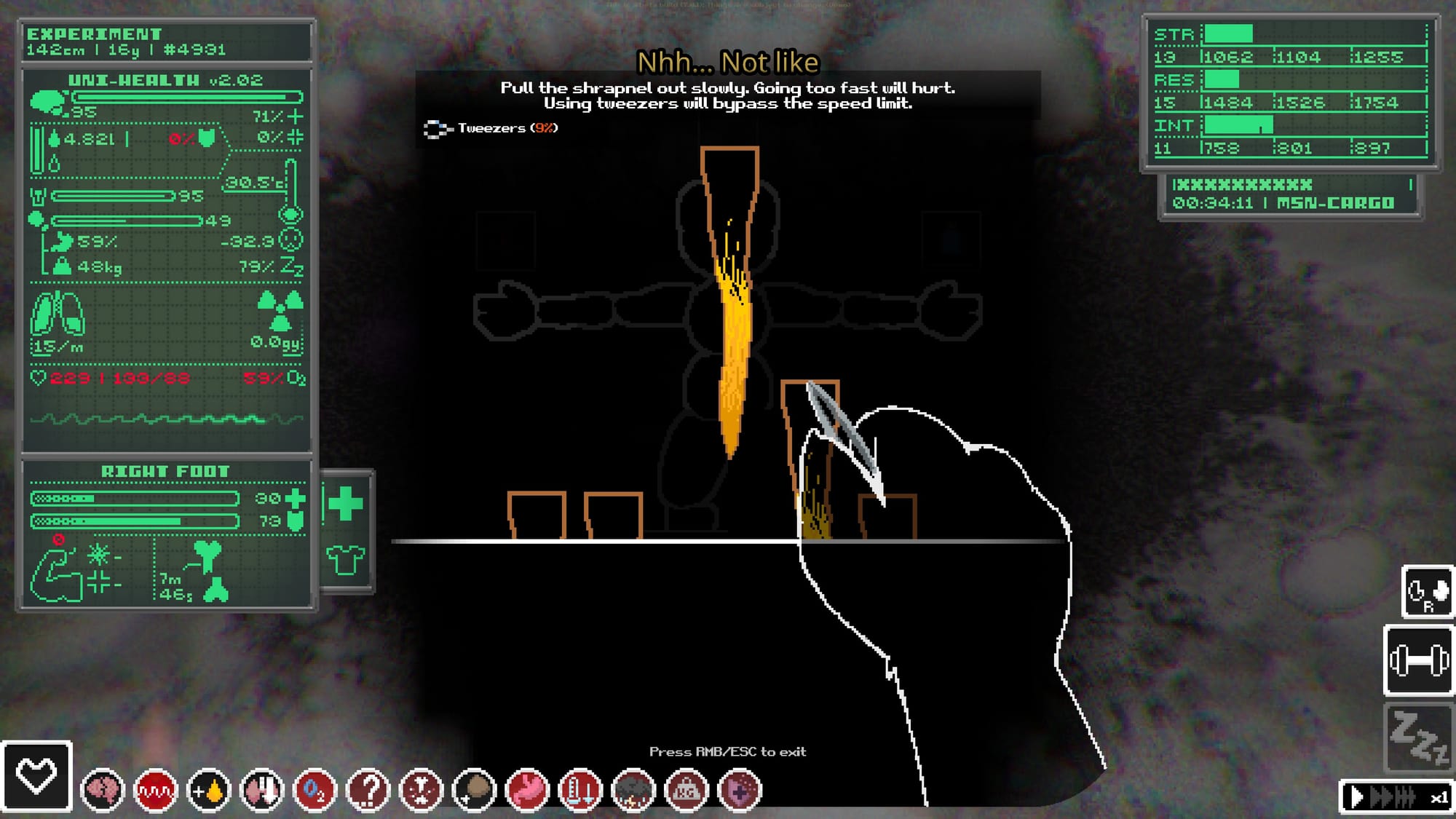
Various minigames you will encounter on your many first aids on the Sawians
Because this game is so much more than just a "masochist/sadist simulator". Casualties: Unknown is at its best when you approach it like you would a metroidbrania: each run you expand your knowledge a little bit, and then that knowledge helps you in the future runs. For example, in the first layer you will encounter many plants with a variety of uses. But one of them you won't be intelligent enough to know what it does. You could try just eating it and see if you can figure out what it does, or you can hold on to it until you level up your intelligence. At that point you would learn that the "Naptail" will immediately knock you out, but improve your mood with little adverse effects. As long as you can find a safe (and soft) place to nap, this becomes an extremely useful tool to keep your mood up in the early game. And that's just one of many examples where you can re-use knowledge you gained as a player, even if that knowledge was lost to your playable character. From what pills do, how threats look, up to what items are useful for crafting – no knowledge goes unrewarded.
The game does, arguably, feel over-complicated at times. In most games you would see a fraction of mechanics, items, and crafting recipes that C:U offers. Here you have both a minimal inventory space with a weight limit, and dozens of items that will you'll surely use at some point. Trying to keep yourself stocked for every possible emergency while also getting the materials to upgrade your gear and all the food and drinks you need to survive? It's a lot, and you will always find yourself making choices on what is the actual most important thing to carry.
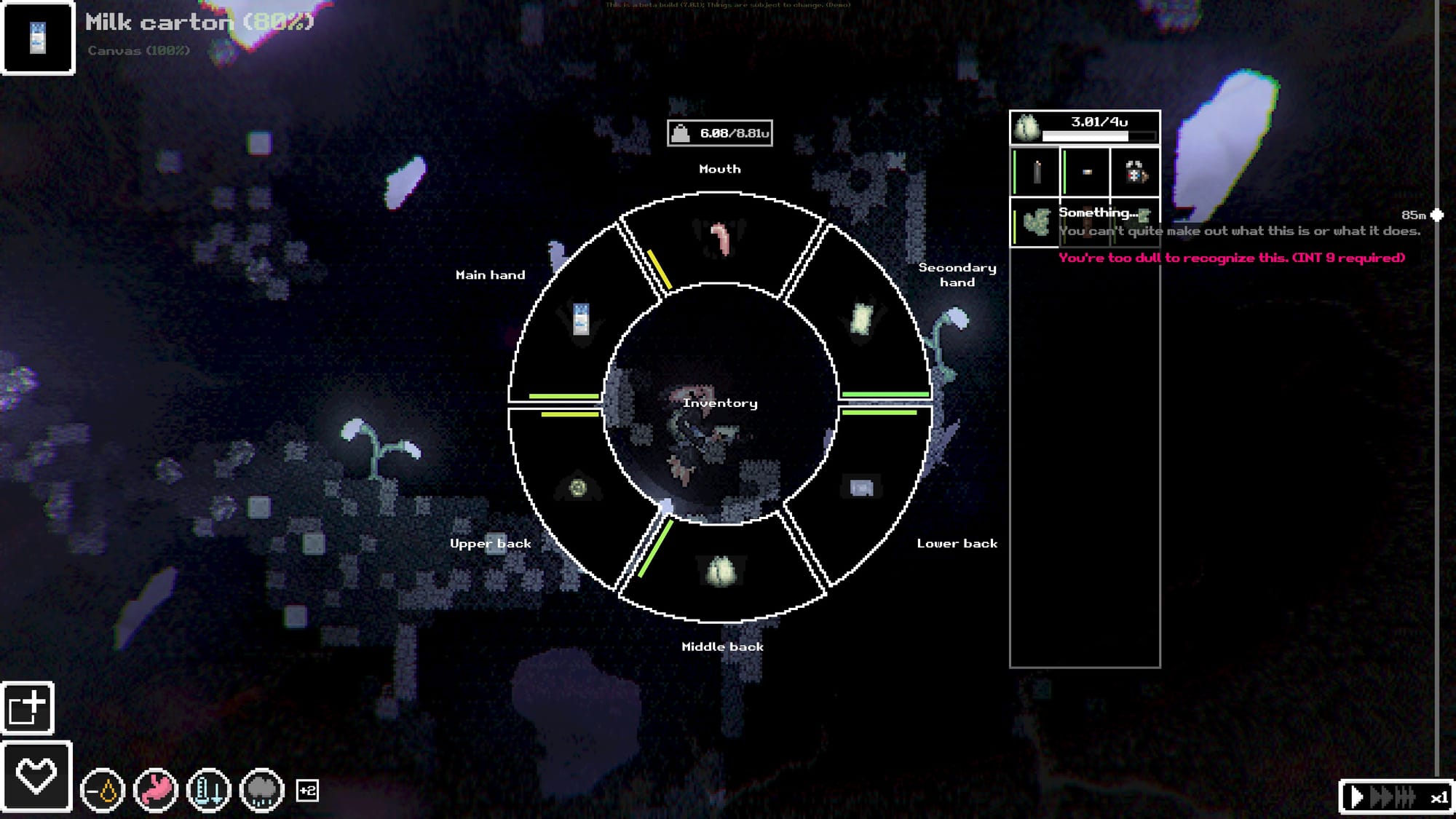
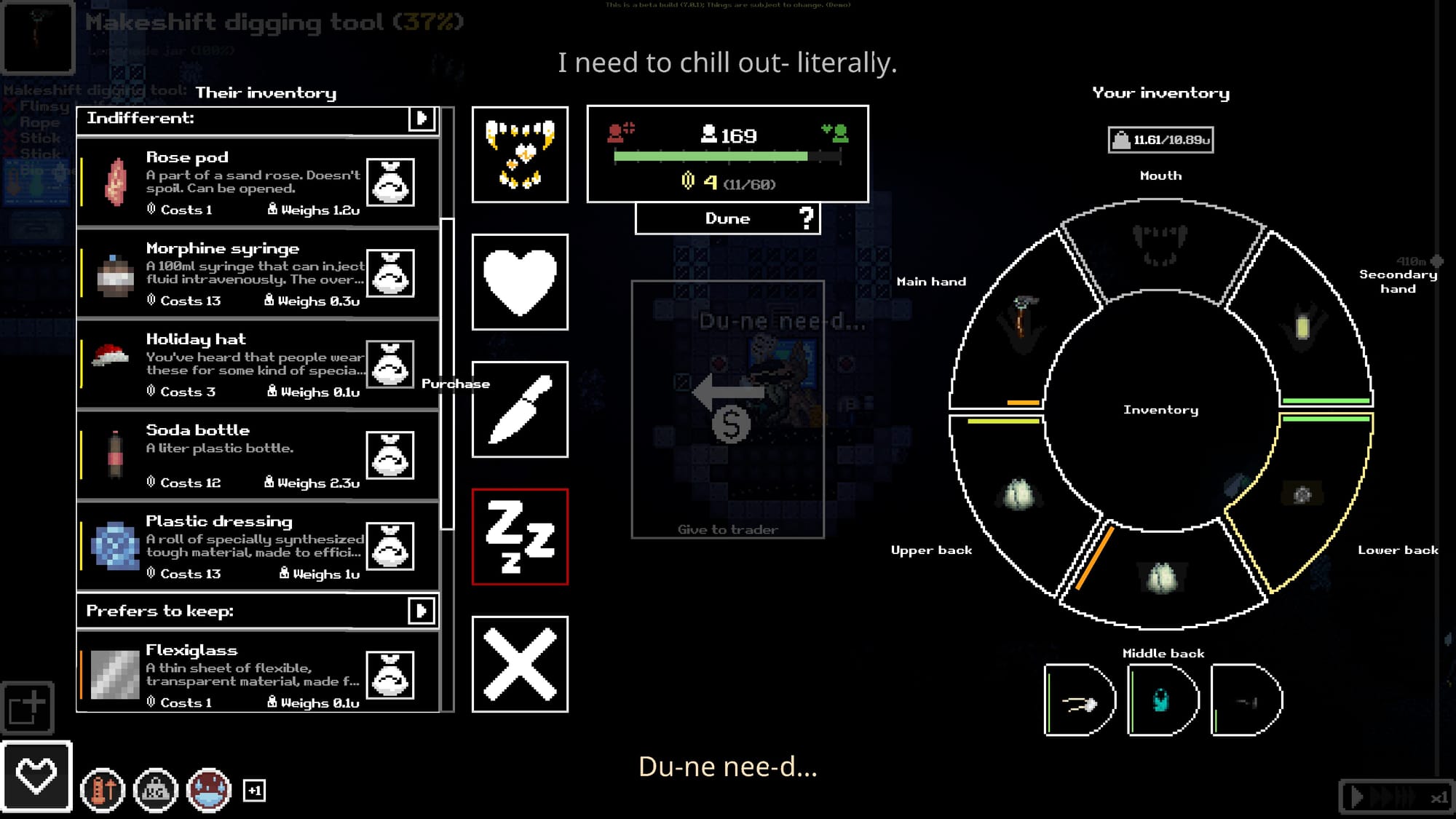
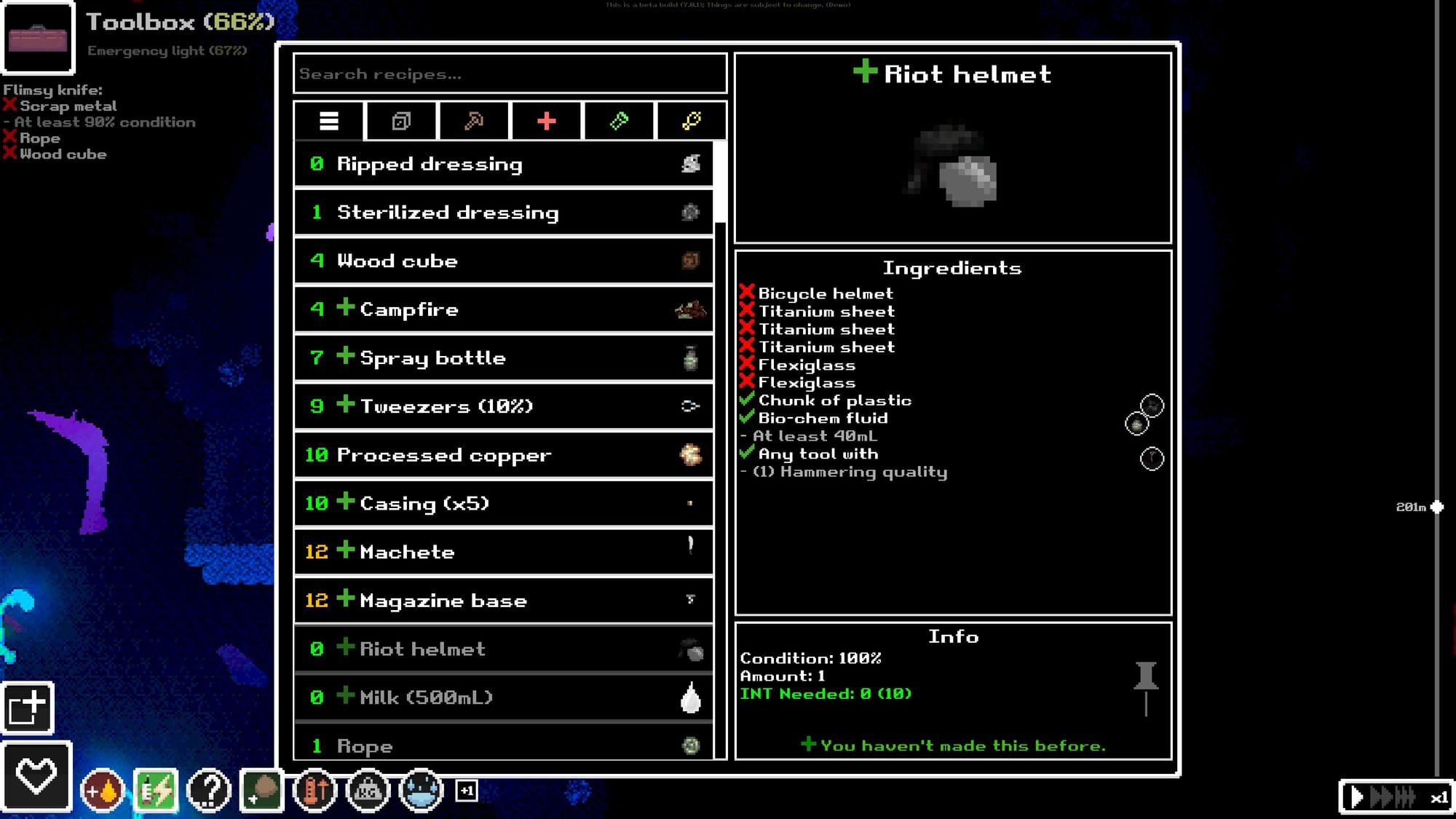
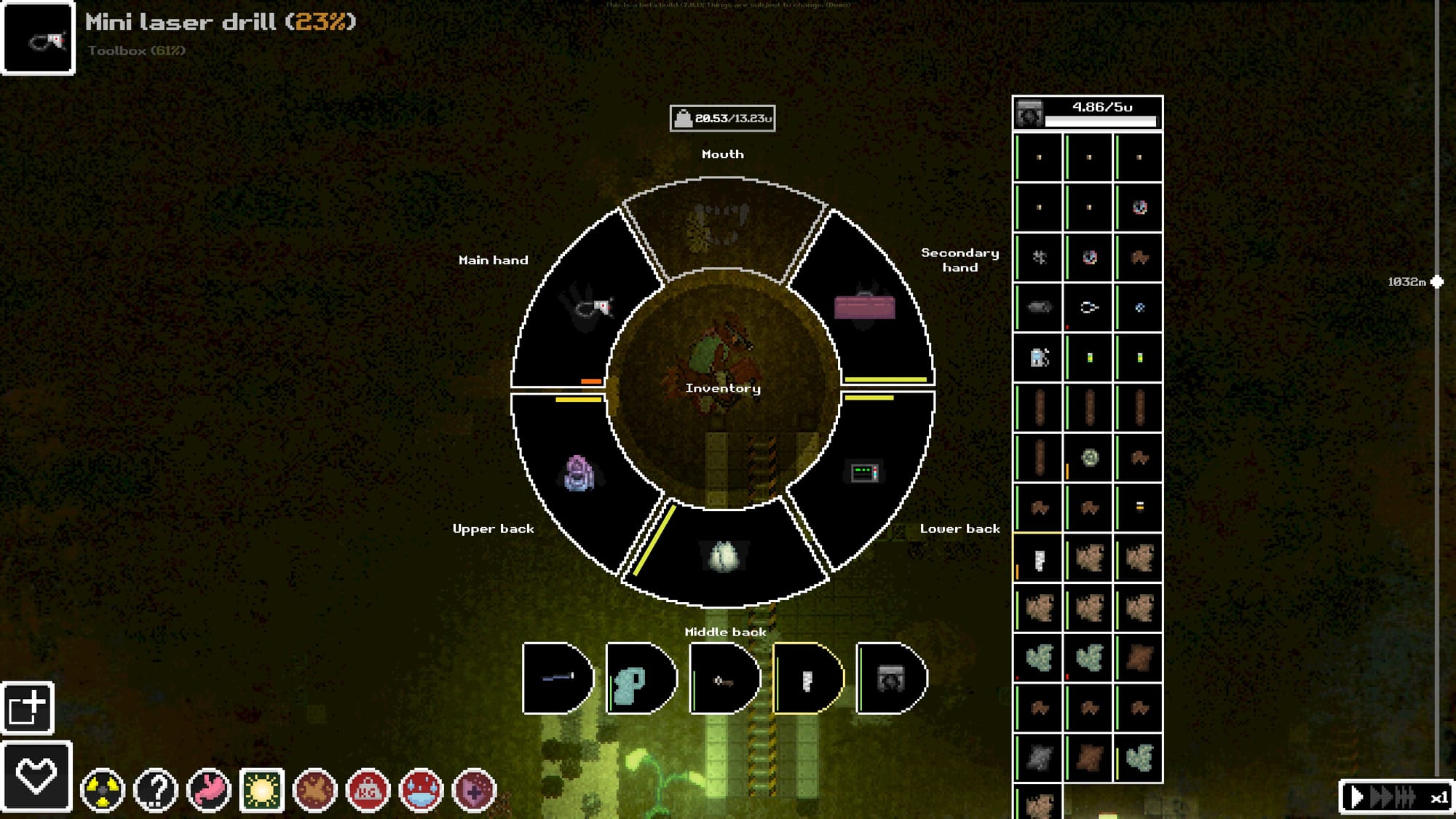
There is truly a staggering amount of different items you will want to hold on to
However, what sets Casualties: Unknown apart from other titles that are bloated with content that serves little purpose, is that everything has at least one use, and many have multiple. A Santa hat isn't just a cosmetic item, it actually provides you a bit of protection from head injuries, and in an emergency can be ripped up and serve as bandages. A wrench can be used to remove batteries from tools, but also to smash seed bulbs into flour or more efficiently adjust dislocated bones. And a gun... well, it's just a gun, and it's probably missing a magazine and bullets, but you will be glad to have one once you reach the overgrown depths...
Personally, I think the overbearing amount of items with cumbersome inventory management is part of why this game works so well – alongside the limited visibility and time-consuming minigames. It's just all too much for you to keep track of, so it's only a matter of time before you slip up. And the game thrives on you messing up. The more you panic, the more mistakes you make, making things more hectic and interesting. Technically, you could have a very calm experience if you just took your time as you descend through the caves. Technically, because in reality there is a (very generous) time limit on how much time you can spend in each layer before you are forced to descend or die. And that's not even touching on all the creatures, traps, and hazards that can surprise even the most prepared players.
Most importantly, throughout it all the game is not unfair. Everything you're carrying and wearing is visible on your sprite at all times, so you can quickly notice if you dropped something like your massive toolbox with all your important goods. There are plenty of statuses and warnings well ahead of time that both help in feeding the panic and in informing you what it is that's actually wrong with you. Even your character will inform you about their mood and problems allowing you to deal with them as they appear, and not once they evolve into catastrophes. The audio-visual experience is genuinely phenomenal, even if the pained yelps of your character are not for the faint of heart.
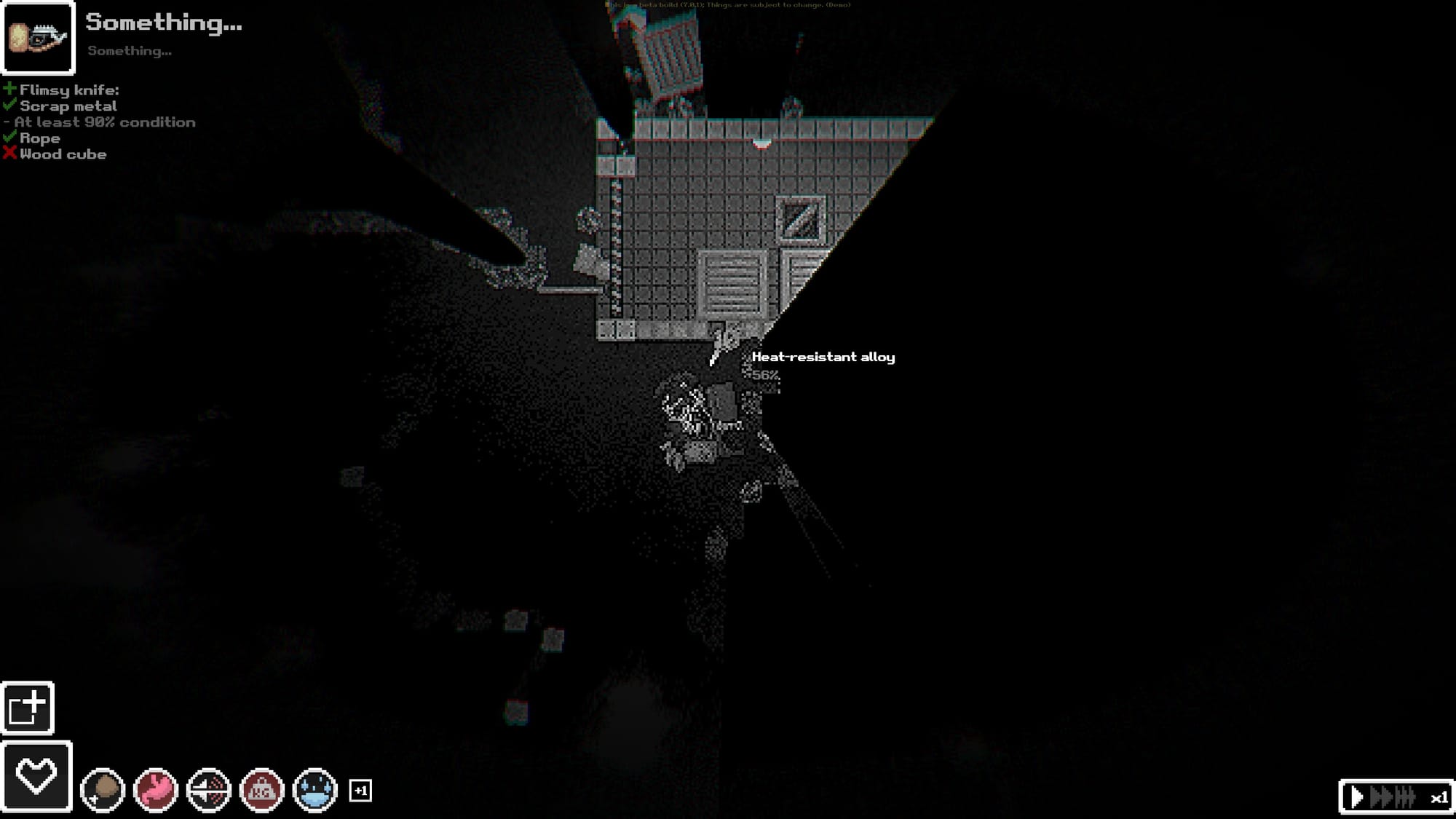
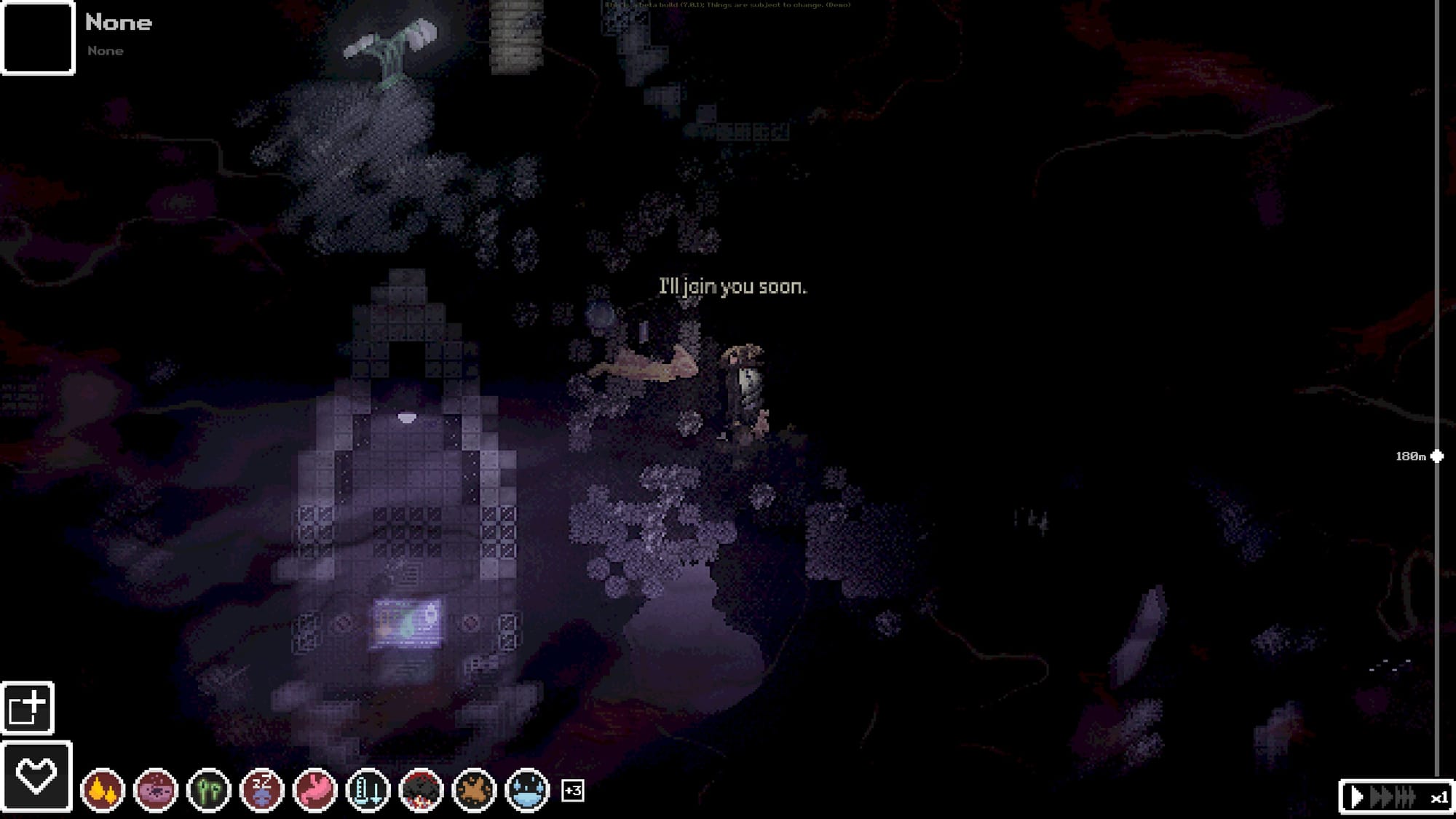
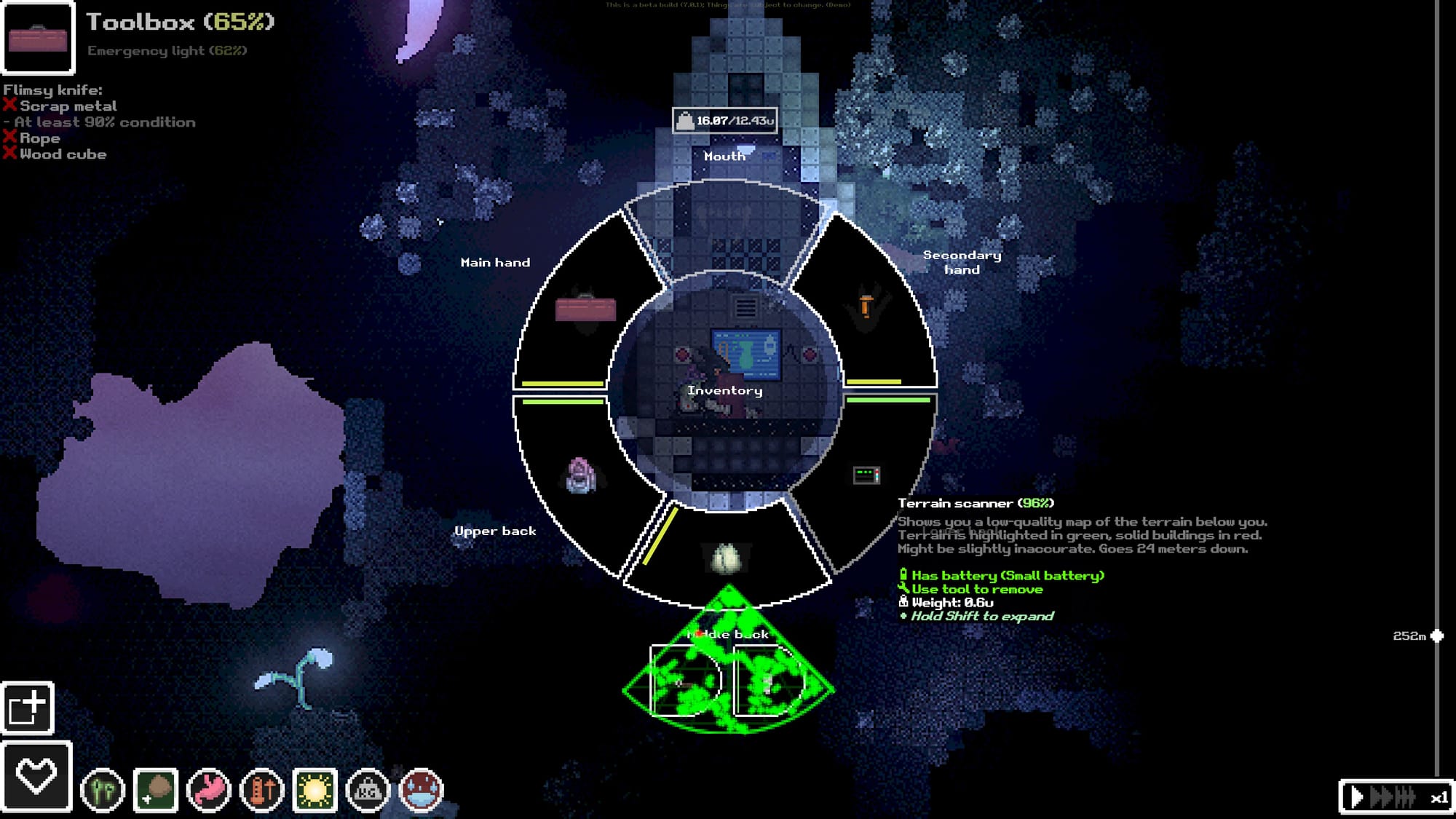
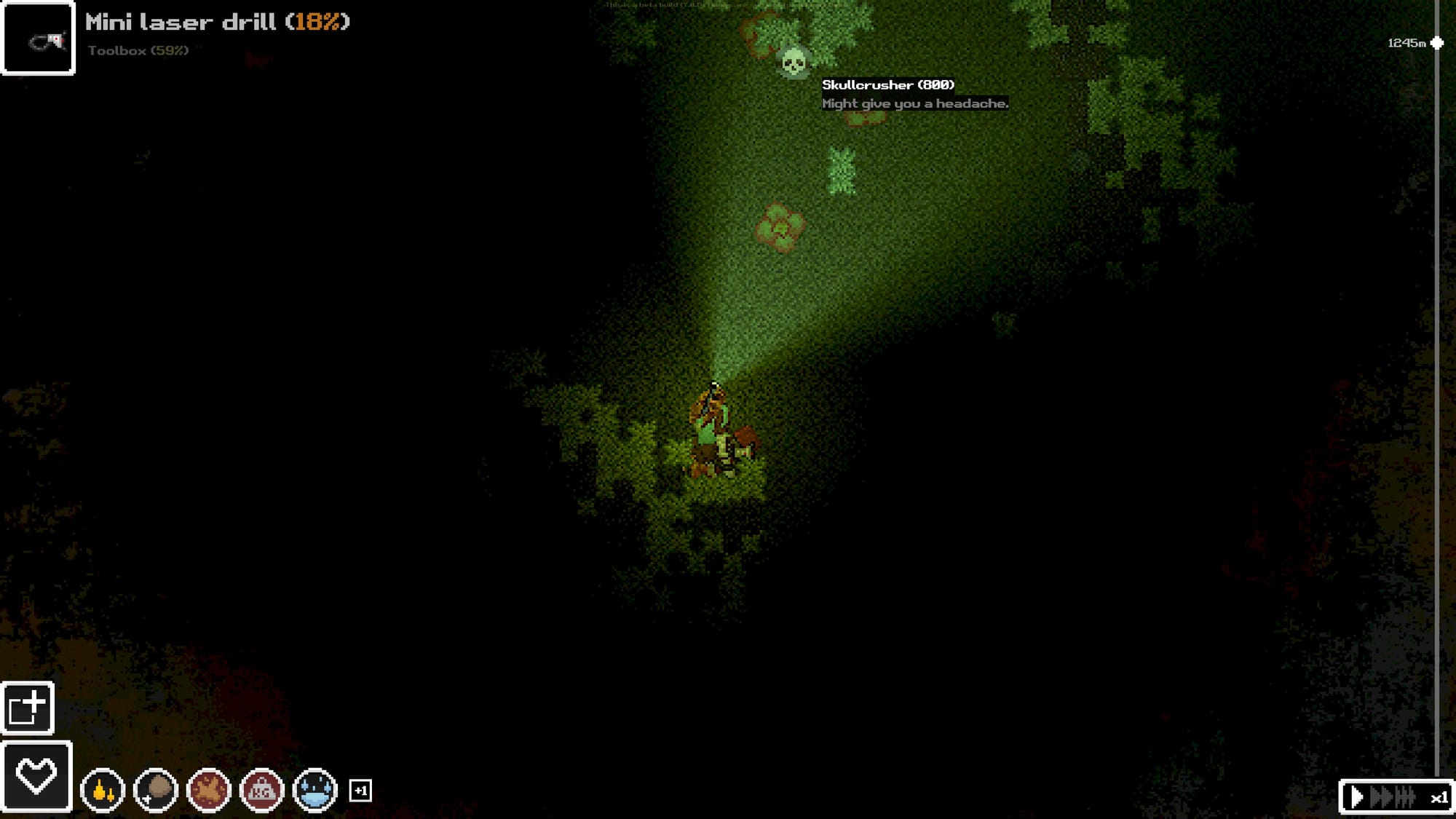
There is only so much a screenshot can convey, but the game completely changes how it looks depending on how well you're doing
If anything of the above sounds remotely interesting, I do heavily recommend giving the demo a whirl. But be warned that it can take a few hours to really get the grasp of the game's mechanics. Because there is so much more here I haven't talked about. The different characters that completely change how you play the game. The deep lore hidden away from view and giving your character intelligence points when found. The actual run-to-run methodology and slow improvement path. But learning through mistakes is the main joy of the game, so I'm not about to rob you of all the fun. This may not be Outer Wilds, but the less details you know the better stories your deaths will make.